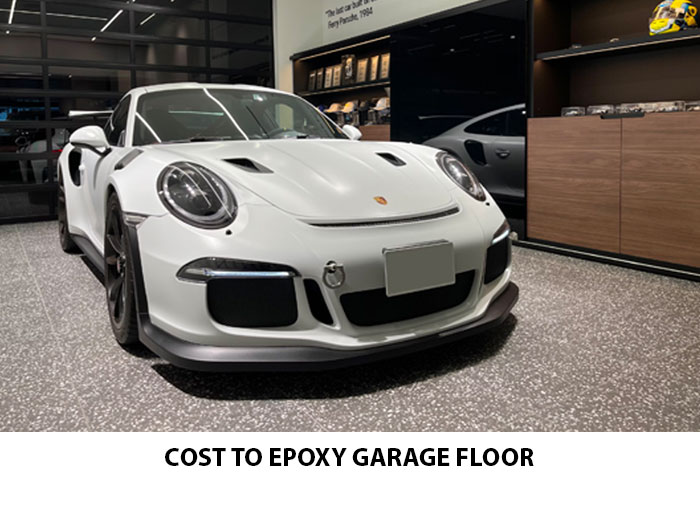
Looking to find the average epoxy garage floor cost? In this guide, you’ll see how much it costs to epoxy a garage floor yourself, the cost to hire professionals, the needed supplies, different styles of epoxy, and more! Let’s get started.
Average Epoxy Garage Floor Cost
The average epoxy garage floor cost usually falls somewhere between $1,000 and $3,000, but that number can swing depending on your garage size and the type of epoxy you pick.
To dig into the number, let’s talk about the different types of epoxy you can choose from, and point out what affects the price. Want to stretch your budget further? You’ll also find a few money-saving tricks that can help you get the look you want without overspending. Let’s break it down.
Average Cost Per Square Foot
How much are we really talking when it comes to upgrading your garage with epoxy? The average epoxy garage floor cost per square foot is typically between $3 and $12 per square foot. That’s a big range because it depends on things like how fancy you go with the finish, how tricky the install is, and who’s doing the work.
Keep in mind—your location and the contractor’s skill level can make a big difference in the overall total. A basic job in one area might cost the same as a premium finish somewhere else. Knowing what factors drive up the cost can help you plan smart and stay in budget.
Average Cost For One Car Garage
Coating a single-car garage with epoxy is one of the more budget-friendly ways to give your space a clean, upgraded look. For smaller garages, you’re usually looking at spending somewhere between $400 and $1,000 total, though that number depends a lot on the epoxy you pick and whether you roll up your sleeves or call in the pros.
Going the DIY route can be a smart move for compact garages, especially if you’re in a region where the weather cooperates and helps with the curing process. It’s a manageable project that can transform a plain slab into a slick, durable surface without blowing your budget.
Average Cost For Two Car Garage
Epoxying a two-car garage takes things up a good amount, both in scale and price. The bill usually lands between $1,200 and $3,000, depending on the condition of the concrete and the look you’re going for. Bigger spaces mean more materials, longer prep time, and often a bit more elbow grease—especially if there are cracks or uneven spots to deal with.
That’s why many folks opt to bring in the pros for this size of job. It’s a lot to take on without specialized tools or experience. Want to get fancy? Upgrades like metallic finishes or color flakes will raise the total cost, but they seriously boost curb appeal and can turn your garage into something that actually feels custom.
Average Cost To Epoxy Three Car Garage
Covering a three-car garage in epoxy is a big project, and it comes with a bigger price tag. You’re generally looking at anywhere from $3,000 to $6,000 or even more, depending on how fancy you get. With that much square footage, material and labor costs add up fast, but you also get room to play with bold upgrades like multi-tone designs, textured surfaces, or slip-resistant coatings.
Tackling a space this large is best left to the pros. It’s not just about making it look good—it’s about doing it right so it lasts. A professionally installed epoxy floor in a garage this size doesn’t just hold up to daily wear—it can also give your home’s value a nice little bump when it’s time to sell.
Additional Garage Floor Epoxy Costs
There are more costs to consider than just the actual epoxy itself such as resurfacing, finishing, and sealing your floors. Here’s a breakdown of the costs associated with each one.
Cost To Resurface
If your concrete’s seen better days, garage floor resurfacing could be on the table first. That cleanup job usually runs around $1 to $3 per square foot, depending on how rough things are.
Cost To Finish
Thinking about adding some personality or extra durability? Finishing touches—like color flakes, high-gloss finishes, or non-slip textures—can drive up the cost to finish a garage floor, often landing in the $1 to $5 per square foot range.
Sealing Costs
And don’t forget sealing. Locking everything in with a quality sealant helps protect your investment. The cost to seal a garage floor usually adds another $0.50 to $2 per square foot. It’s a small extra charge that can go a long way in keeping your new epoxy looking sharp and holding up over time.
How Epoxy Compares To Other Garage Flooring Types
When it comes to garage flooring, epoxy stands out for its sleek look and super tough durability. Compared to bare concrete, which stains easily and creates dust, epoxy creates a sealed, smooth surface that’s resistant to oil, chemicals, and wear. It also holds up better than simple concrete paint, which can chip or peel under pressure. If you’re after something long-lasting and low-maintenance, epoxy definitely earns its spot at the top.
Other options like interlocking tiles or garage mats offer quicker DIY solutions, but they don’t usually match epoxy’s polished look or strength. Tile floors can shift over time, especially in high-traffic areas, and mats can bunch or tear. Epoxy, when professionally installed, becomes a permanent part of your floor and can last for years with minimal upkeep. If you’re weighing long-term value, durability, and visual appeal, epoxy often comes out ahead.
Comparison Costs
As we said earlier, the average cost of garage floor epoxy is about $3 to $12 per square foot depending on the type of epoxy, surface prep, and finish you choose. That’s quite a bit more expensive than a simple concrete sealer or garage floor paint, which can cost as little as $1 to $3 per square foot—but those cheaper options usually don’t hold up nearly as long and often need to be redone every couple of years.
On the flip side, epoxy is generally more affordable than premium tile systems or polished concrete. Interlocking garage tiles, for example, can run between $5 to $15 per square foot and require precise installation to look good and last. Polished concrete, while sleek and durable, can climb to $6 to $20 per square foot. So if you want something that looks great, lasts for years, and doesn’t wreck your budget, epoxy tends to strike the best balance between cost and performance.
What Affects The Cost?
How much you’ll pay to epoxy your garage floor really depends on what you’re working with. The average epoxy garage floor cost can jump quickly if your space is oversized or the surface is beat up. More square footage means more materials and more time on the job—simple as that.
Got cracks, oil stains, or rough patches? Those need to be fixed first, and that prep work can bump up your final bill. Oddly shaped garages can also complicate things. If the layout’s not standard, installers might have to cut and place materials more carefully, which takes extra time (and money). Taking a close look at your garage’s condition ahead of time helps you get a clearer idea of what you’re in for cost-wise.
Pros and Cons of Doing It Yourself
Thinking of tackling your epoxy garage floor yourself? A DIY approach has its highs and lows, just like any home project.
Pros
It’s usually cheaper upfront, which is appealing if you’re trying to keep the average epoxy garage floor cost as low as possible. You’re also in full control of the timeline, meaning you can chip away at it on weekends or after work. There’s also a solid sense of pride that comes with doing it all yourself. Want to play around with colors, flakes, or finishes? You can go wild without paying extra labor fees.
Cons
DIY epoxy takes serious time and patience. The prep alone—cleaning, repairing, and possibly grinding the floor—is a project all its own. Without the right tools or experience, it’s easy to mess up the application, leading to peeling, bubbles, or an uneven look. And if the surface isn’t prepped just right, you might be redoing it way sooner than expected. So while DIY saves money upfront, mistakes can end up costing more down the road.
Cost To Hire Professionals
The price is obviously very different if you do it yourself vs hiring professionals. Here are the costs to hire someone to do your epoxy garage flooring:
Pros
- Top-Notch Finish: Professionals bring industrial-grade tools and expert techniques for a smooth, durable, high-end look.
- Quick Turnaround: Most jobs are wrapped up in a day or two—no lost weekends or drawn-out projects.
- Problem Solvers: From cracks to uneven concrete, pros know how to prep surfaces right before epoxy goes down.
- Peace of Mind: Many companies include a warranty, so you’re covered if the finish doesn’t hold up.
Cons
- Higher Price Tag: Professional work raises the average epoxy garage floor cost considerably compared to DIY.
- Contractor Coordination: You’ll need to schedule around availability, which might delay your plans.
- Limited Personal Touch: Some installers offer fewer style or finish options than doing it yourself.
Conclusion On The Average Epoxy Garage Floor Cost
Epoxy garage flooring isn’t the cheapest type of garage flooring but it’s a really great option that lasts a long time and at a great price. No matter the size of your garage or the style you’re after, epoxy flooring is a solid investment that adds both function and flair. From single-car setups to spacious three-car garages, it offers a sleek, low-maintenance finish that holds up against oil, chemicals, and everyday wear. The average epoxy garage floor cost can vary, but the long-term benefits, like durability, style, and even added home value, make it worth considering.
Whether you’re rolling it on yourself or hiring a pro, understanding the factors that affect pricing can help you plan smart and get the most bang for your buck. With the right prep and finish, your garage can go from basic to bold, and stay that way for years to come. Keep in mind that the price will obviously be different for epoxy garage flooring in Tucson vs Sacramento vs Boston.