
Should you paint before or after flooring? A lot of people think you should paint first to avoid spilling paint on your new floors, but that’s wrong. Anyone who knows what they’re doing will tell you that you should install your new floors before you paint. Let’s go over why and how to do it.
Why You Should Install Flooring First
It seems obvious that you should paint first before installing floors because you don’t want to ruin your new flooring with paint. But it’s totally backwards, you should install flooring first because it frequently scrapes and ruins parts of your walls. If you paint first, you’ll either end up with lots of scrapes and messed-up walls.
Here’s how to do it:
1. Remove Your Old Flooring/Carpet
Old carpet or outdated flooring needs to go, and it’s not a clean job. Once you start pulling things up, you’ll stir up lots of dust, dirt, and anything else that has settled underneath over time. If you decide to paint first, all that grime can float onto your freshly painted walls or trim, ruining your newly painted walls. Plus, it’s not uncommon for wall scuffs and dings to happen during flooring installation. If you’ve already painted, you might be stuck doing extra repairs or touch-ups.
That’s one of the reasons why you should wait until after the flooring goes in before you even think about picking up a paintbrush.
2. The Baseboards and Trim
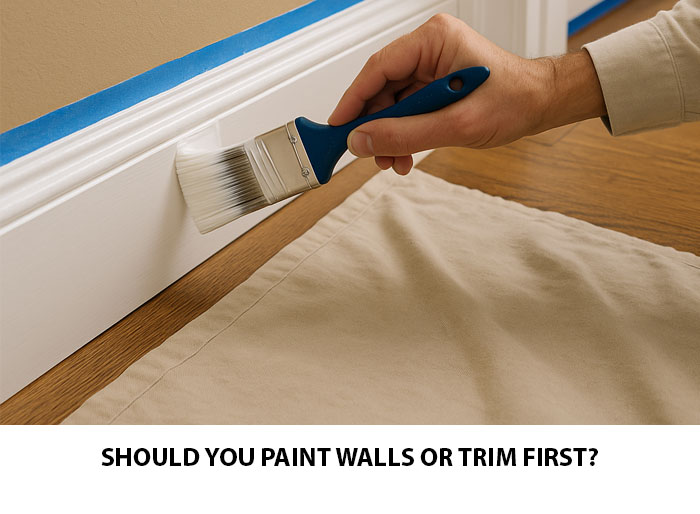
Flooring projects often mean you have to take off the baseboards and can sometimes even mean the lower trim. Once removed, these usually need a little attention, repainting, patching nail holes, or even replacing sections if they’ve been damaged. If you’re wondering whether to paint before or after flooring, you should think about the trim work. It’s often easier to paint once the baseboards are back on and nailed into place. That way, you won’t have to guess where the paint should stop, and you avoid double work if the new floor height changes things.
3. Prepping Walls the Smart Way
If your walls need any patching, sanding, or wallpaper removal, we recommend you do that before your new floors go in. These tasks tend to get pretty messy, and having a clean, bare subfloor underneath makes cleanup easier. It’s especially important if you’re installing something like an epoxy floor, where debris can interfere with adhesion.
4. Keeping New Floors Protected
Once your new flooring has been installed, you can use painter’s tape and drop cloths to keep everything safe while you paint. These materials do a great job of guarding your floors against drips or accidents. Since painting is typically one of the final steps in a remodel, many pros choose to leave it for last, after everything else is in place.
Does Your Flooring Type Matter?
While each flooring material has its own quirks, the general rule stays the same: it’s usually better to install flooring first. Whether you’re dealing with tile, hardwood, or epoxy, it’s much easier to clean up and protect new floors than to touch up freshly painted walls after the fact.
Take unfinished hardwood, for example. It’s not just install-and-go—you’ll need to stain and sand it. That means splashes, dust, and shavings flying everywhere. If you’ve already painted the walls, there’s a real chance all that debris will stick to the paint or mess up the finish. And if the stain or sealant gets on the walls? That’s another headache.
Refinishing old hardwood floors is even messier. Sanding and buffing throw up a storm of particles that settle on everything. That includes freshly painted surfaces if you decided to go that route first. So when weighing whether to paint before or after flooring, this is one case where going with the floors first can save you big time on cleanup and do-overs.
What About Basement Epoxy Flooring?
If you’re putting down epoxy flooring in your basement, the same general rule applies—handle the floor first. Epoxy goes on in multiple layers, with curing time between coats. It’s not something you want to rush. And because the surface needs to be perfectly clean before applying a sealant, it’s smart to get all your sanding and prep work for the walls done beforehand.
After the epoxy cures, you can easily protect it with drop cloths or painter’s plastic while you paint. That way, you’re not risking any drips messing up the glossy finish or sealing in specks of dust.
When You Should Paint Before Flooring
While flooring should usually come before painting, there are a few situations where you should actually paint before installing floors.
- If your trim isn’t part of the flooring job and won’t need touch-ups later, you’re in the clear to paint first.
- Planning to install new baseboards that already come finished or stained to match the flooring? Go ahead and get the walls done before they go up.
- When the baseboards sit flush against the new floor, painting the walls first avoids awkward gaps or tricky edge work later.
- Installing tile with a matching bullnose edge? That clean edge acts like a built-in trim, making it easy to paint ahead of time.
- If your new vinyl, laminate, or linoleum flooring will have a stained wood trim or shoe molding that doesn’t need painting, doing walls first can save time.
In all these cases, deciding whether to paint before or after flooring depends on how much trim or touch-up work you’ll have to do later on. When there’s no risk of needing to go back and fix the walls, painting first can actually make the job easier.
What About Vinyl?
Vinyl flooring is a popular pick for good reason, it’s tough, budget-friendly, and comes in a variety of styles. But one question often comes up during home updates: should you paint before or after flooring when it comes to vinyl?
Reasons to Paint Before the Floor Goes In
- Protect the walls: Laying vinyl can get messy. Between cutting planks and shifting furniture, it’s easy to leave scuff marks behind. If your walls are already painted, they might take the hit.
- Skip the floor shielding: Painting after vinyl’s installed means covering every inch with tape, cloths, or plastic. Painting first skips all that hassle.
- Less stress about splatter: Even the neatest painters deal with drips. Get the walls done first and you won’t be worrying about stray paint landing on brand-new flooring.
When Painting After Can Be Better
If your vinyl job includes new trim or quarter round, holding off on painting until the flooring’s done could save you a second round of touch-ups. Once everything’s installed, you can patch up any scrapes from tools or trim work in one go.
Painting Before or After Flooring Conclusion
When it comes to whether or not you should paint before or after flooring, it’s almost always better to install flooring before painting, but there are some exceptions, such as specific situations with vinyl. Keep in mind that the answer depends on the type of flooring you’re installing and the amount of trim work included.



Leave a Reply